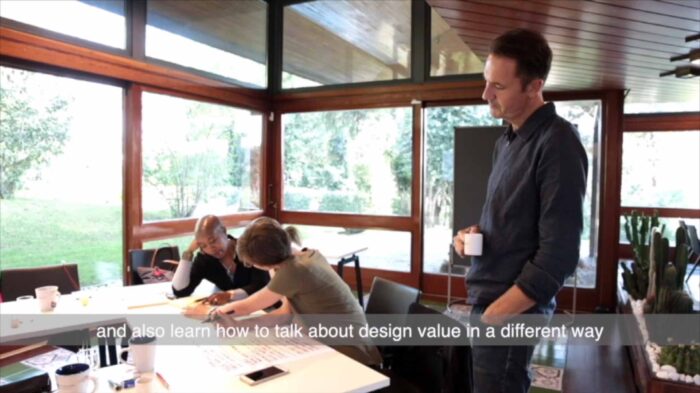
A short video by Duane Smith and Stefane Barbeau elaborating on the concept that Design is Planning.
Tag: design

What User Experience (UX) Really Means
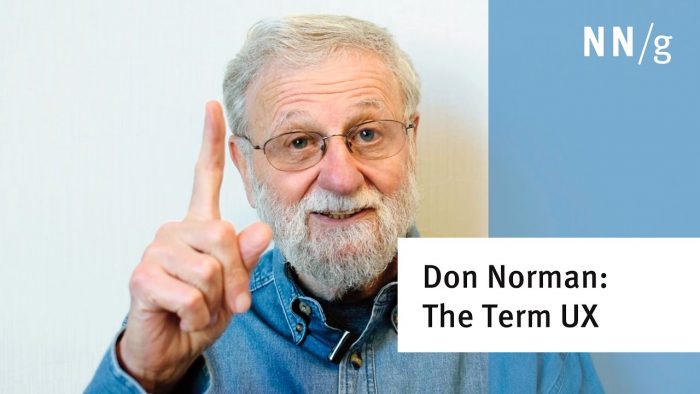
Listen to what Donald Norman, the inventor of the term User Experience really meant when he created the term User Experience (UX).
Transcript
Once upon a time a very long time ago, I was at Apple, and you know, we said the experience of using these computers is weak.
The experience when you first discover it, when you see it in the store, when you buy it, when you oh, can’t fit into the cars in this great big box that doesn’t fit into the car, and when you finally do get it home; opening the box up and ooh it looks scary: I don’t know if I dare put this computer together — all of that is user experience;
it’s everything that touches upon your experience with the product. And it may not even be near the product. It may be when you’re telling somebody else about it.
That’s what we meant when we devised the term “user experience” and set up what we called the User Experience Architect’s Office at Apple to try to enhance things.
Now, Apple was already pretty good so we were starting with a good product, making it even better. Today that term has been horribly misused. It is used by people to say “I’m a user experience designer, I design websites, so I design apps” and they have no clues to what they’re doing and they think the experiences that simple device the website or the app or who knows what.
No, it’s everything: it’s the way you experience the world, it’s the way you experience your life, that’s the way you experience the service, or — yeah an app or a computer system — but it’s a system that’s everything.
Got it?

Systemic Design Toolkit by Kristel van Ael of Namahn
Live notes from the webinar Keynote: Hands-on with Systemic Design by Kristel van Ael of Namahn during The Virtual Design Thinking BarCamp 2020 held on 25 April 2020. Read the article to discover how to download the toolkit to help you in facing Wicked Problems.
Kristel van Ael talked about Systemic Design, the differences and similarities to Design Thinking and she introduced the Systemic Design Toolkit, a tool to help using the methodology in business contexts.

Systemic Design Toolkit Virtual Design Thinking Barcamp Namahn is Humanc-centred design agency in Brussels, Belgium.
Systemic Design Definition
Systemic Design integrates systems thinking and human-centered design, with the intention of helping designers cope with complex design projects (also called Wicked Problems).
Traditional design methods are inadequate to face the recent global challenges stemming from increased complexity as globalization, migration, and sustainability.
Systemic Designers need improved tools and methods to design responsibly while avoiding uninterested consequences/side-effects.
source: https://en.wikipedia.org/wiki/Systemic_design
Characteristics of Wicked Problems
Wicked Problems involve multiple aspects, multiple parties, multiple interests and perspectives. They show no clear link between cause and effects.
See how we failed with poverty reduction, waste management, migration, pollution and climate crisis.

Limits to Growth. Donella Meadows. The problem with Reductionist Thinking
From a very early age, we are taught to break apart problems, to fragment the world. This apparently makes complex tasks and subjects more manageable, but we pay a hidden, enormous price.”
—Peter Senge, The Fifth Discipline.Unintended consequences

The Cobra Effect. An example of unintended consequences. Unintended consequences are outcomes of a purposeful action that are not intended or foreseen.
- Unexpected benefit: A positive unexpected benefit (also referred to as luck, serendipity or a windfall).
- Unexpected drawback: An unexpected detriment occurring in addition to the desired effect of the policy (e.g., while irrigation schemes provide people with water for agriculture, they can increase waterborne diseases that have devastating health effects, such as schistosomiasis).
- Perverse result: A perverse effect contrary to what was originally intended (when an intended solution makes a problem worse).
How is COVID 19 an intended consequence?
What is Systemic Design?

What is Systemic Design? Systemic Design lays at the intersection of Design Thinking and Systems Thinking and aims at helping designers to face complex problems.
- By zooming out to understand how the parts of the system influence each other.
- By zooming in, co-designing, with the stakeholders, the components that can leverage Systems Change.
Design Thinking has a focus on the parts, products and services, to create optimal User Experiences.
- provides a structured problem-solving process
- Puts people on the center
- Hands-on, co-creative, cross-disciplinary
- allows to learn and improve through prototyping, and testing
Systems Thinking has a focus on the whole, on the interaction of stakeholders, products and services aiming at influencing the emergent behavior of the system.
- to identify non-linear relationships (see also Circular Design and Circular Economy)
- Provides multiple levels and perspectives
- thrives on dialogue and Collective Intelligence
- Works with and on leverage points
- It’s open ended, shaping the conditions for change. With the Systems Thinking approach you need to focus on creating an environment conducing to the emergence of the changes that you aim for.
The Systemic Design Toolkit
Built by Namah in collaboration with shiftN, MaRS and SDA, the Systemic Design Toolkit is a methodology and a library of tools based on academic research and human-centre design expertise.
It’s based on the principle that Systems Change should be co-designed and co-created within the system and with the actor of the system, preferably, with the stakeholders in the same room. And provides tools to foster dialogue between the parts without requiring participants to master its inner working and principles.

The structure of the Systemic Design Toolkit. Diagram. The Systemic Design Toolkit is composed by seven steps and includes more than 30 tools.
- Framing the system (Systems Thinking)
- Listening to the system (Design Thinking)
- Understanding the system (Systems Thinking)
- Defining the desired future (Design Thinking)
- Exploring the possibility space (Systems Thinking)
- Designing the intervention model (Design Thinking)
- Fostering the transition
Framing the system
You cannot change what you don’t know: generate shared understanding of the current context and identify the stakeholder to involve.
Map the rich context of current practices, trends and innovative initiatives.
Listening to the system
Analyze the interactions between the actors by identifying hidden relationships.
It’s a way to communicate the essence of your field research.
Actants describe archetypical relationships.
Understanding the system
Develop a shared understanding about forces and interdependencies in the system to discover the leverage points.
Create a system map, “make the system visible” by visualizing its structure and the relations between its components.
Defining the desired future
Align the stakeholders on the Value Proposition. What do we want to change and how? What is the future we are imagining?
Co-Design an ideal desired future (better thinking about “futures”) by imagining how we want to improve the future context of individuals, organizations and society.
Related: see Speculative Design.
Exploring the possibility space
To give sense to the whole process designers need to explore different types of possible intervention by making sure they are covering the big picture emerged by the initial research activities.
A brainstorming activity to craft an intervention strategy in which you explore the leverage points in a system.
Designing the intervention model
Investigate how interventions connect and reinforce each other to envision an effective strategy for change.
The intervention model represents the DNA of change. Interventions are Design Concepts that will enable Systems Change.
Fostering the transition
Plan the transition towards the desired goal by moving from the Minimum Viable Product (maybe the Minimum Viable Solution in this case) to the full implementation of the intervention model.
The roadmap for transition is a tool to plan the implementation of the interventions, in a way that transformation happens step by step.
Get the Systemic Design Toolkit
Download the System Design Toolkit Guide.

Speculative Design, Critical Design, and Future Design. Notes from the Webinar by Debora Bottà
Speculative Design is about re-imagining our imagination to create better futures that are possible and desirable. These are the notes I’ve taken, live, during the webinar held by Debora Bottà about Speculative Design/Critical Design and Future Design.
Imagining our future to start building it today
This, in essence, is what these methods are useful for.
Deborà Bottà is a UX & Service Design Lead in Digital Entity of NTT Data. She manages teams designing User Experience for digital and non-digital services. She also the author of “User eXperience Design” a book in Italian about UX Design.
What is Speculative Design?
Captured slide: a typical futuristic landscape shown within the context of Speculative Design When we talk about Speculative Design It’s easy to think about science-fiction landscapes as we can see in movies and Tv series in which our lives are radically transformed by technology. This is not the true meaning and purpose of Speculative Design although these disciplines tap into some of the techniques used by science-fiction to imagine future worlds.
Speculative Design has no roots in this type of literature but in the field of Radical Architecture.
Radical Architecture
A cohort of Italian architects and designers active from the late 1960s through the 1970s. They placed themselves in opposition to the rationalism and functionalism of 20th-century modernism and formed during a tumultuous period characterized by political violence and extremism, student uprisings, and social unrest. Working in collectives including Archizoom, Superstudio, and Studio Alchimia, they produced experimental, anti-establishment architectural and interior designs, furnishings, and objects. A spirit of playfulness undergirded an approach that had serious aims. Their eccentric output—ranging from speculative monuments meant to foster worldwide order to lounge chairs shaped like an oversized patch of grass—broke from what they saw as the prescriptive thinking of the past to shape a future free of war, inequality, materialism, and other human ills.
—https://www.moma.org/collection/terms/135Radical Architects wanted to promote utopian ideas of architecture using what were considered as advanced technologies at that time. Italian culture, as frequently happens, was also key in the development of this movement.
A definition of Speculative Design
“Let’s call it critical design, that questions the cultural, social and ethical implications of emerging technologies.
A form of design that can help us to define the most desirable futures, and avoid the least desirable.”
—Speculative Everything, Anthony Dunne and Fiona RabyA Critical Design that reflects on the implications of the technological progress, this is how the seminal book, “Speculative Everything”, defines Speculative Design. What are the most desirable futures? This, the key research topic.
Speculations
An example video of what a Speculative Design activity would produce as an outcome.
A Day Made of Glass… Made possible by Corning. (2011) The application of technology where transparent surfaces become screen to interact with digital devices, in everyday life: home, business, and education.
A Day Made of Glass 2: Unpacked. The Story Behind Corning’s Vision. (2012) This video shows a utopic vision of a world where technology is pervasive and increases the quality of our lives.
In Black Mirror, an entertainment product, a TV Series produced by Netflix, usage of technologies not always bring good outcomes. In this case, the future is seen in a completely different way.
Black Mirror, TV Series, Trailer. Properties of Speculative Design
- Speculative Design/Critical Design is not utopian nor dystopian. Future has many shades and it’s complex because we’re unpredictable and contradictory compared to the perfect consumers we would we supposed to be
- Speculative Design/Critical Design Is not an exercise in fantasy. it ‘s based on knowing existing technologies and trends, using the knowledge of experts when needed. It considers futures that are probable, plausible, possible, and preferable, but not impossible.

A Taxonomy of Futures. Redrawn from Speculative Everything. Stuart Candy. - Speculative Design/Critical Design is not a prediction of the future. Rather, it creates a narrative of possible future realities to help us questioning the possible implications on the present: on society, on the economy, on business and so on.
- Speculative Design/Critical Design does not solve problems, it finds them. Design becomes a means to search for problems to approach. The role of technology is rediscussed to face its implications rather than its applications.
- Speculative Design/Critical Design does not create innovative products. It rather creates imaginary and fictional worlds that allow us to reconsider our world. It questions ideas and assumptions on the roles of products in our lives.
- Speculative Design/Critical Design does not talk to consumers. It moves from the needs and wants of the market to focus on a broader social context. It creates artifacts to think on and with, not to be purchased.
Manifesto a/b
A comparison table showing the differences between Traditional Design and Speculative/Critical design
(a) Traditional Design (b) Speculative/Critical Design Affirmative Critical Problem-solving Problem finding Design as process Design as medium Provides answers Asks questions In the service of industry In the service of society For how the world is For how the world could be Science fiction Social fiction futures Parallel worlds Fictional functions Functional fictions Change the world to suit us Change us to suit the world Narratives of production Narratives of consumption anti-art Applied art Research for design Research through design applications implications Design for production Design for debate fun satire Concept design Conceptual design consumer citizen user person training education Makes us buy Makes us think innovation provocation ergonomics rhetoric Speculative/Critical Design is the use of design to create artifacts living in a future scenario, fed by current trends, to start a dialogue and a critical reflection. It is not an effort to predict the future but to create stories of possible future realities to question the implication on the present.
—Debora BottàThat is the meaning of the expression: “Imagining our future to start building it today”.
Starting from the reflection we do on future scenarios we go backward to question what we have learned about what we could do and use it to steer our present towards that desirable future.
Artifacts of Speculative Design
Example: Helios Pilot, a project of Near Future Laboratory, commissioned by Amazon. It’s a quick-start guide for a fictional autonomous driving car. The idea was to imagine how they would have presented to future users how to use the car instead of thinking about the actual features of the vehicle.
This helps to empathize with real users and consider the implications of this technology. How is my life changed if I own and use an autonomous car?
It’s a tangible artifact supporting our reflection.
Catalog from the Near Future – IKEA Another example from the same agencies, using the popular IKEA catalog, designers tried to imagine how everyday life would be in the future where the Internet Of Things would be more pervasive. Another way to reflect on a possible future.
Moovel in a Box What if you could be shipped? A very speculative view on the future of personal transportation.
Example: Mitigation of Shock (London) – Suncorp. By Superflux. A pragmatic experiment practicing hope for a future disrupted by climate change Superflux imagined a future in which climate change becomes an important disruption: how would we find food? In a real apartment, they created an installation in which they created every detail about newspapers, books on how to use insects to prepare meals. With special lamps, it would be possible to cultivate plants in-house. In this case, they went beyond the prototype by creating real working technologies.
In this case history, Nefula imagined the futures of work by mapping different possible futures and their relations. Speculative Design, as seen in the previous examples, could be used to imagine a far future or a closer one according to the level of speculation designers are aiming to. It’s always important to remember that al imagined futures must be possible.
what if our data had funerals too? Design Friction explored a what-if scenario: “what if our data had funerals too?” Would data acquire a different value?
The Speculative Design Practice
The Speculative Design Practice is tied to two concepts:
- the speculation on possible futures
- and the design of an alternative present.
And it rethinks the future using those technologies and those social relations that can emerge from our current world. It questions hypotheses and prejudices that we have on the role of products and services in our lives.
Speculative Design Tools
What do designers use in their Speculative Design practice?
Thing from the future card deck
Combining three cards, a type of futures (green), an object (red), a context (blue) you can create combinations acting as creativity prompts to imagine future scenarios.
Example: “in a green future there is a festival dedicated to health, what is it?”
In this exercise, participants are invited to imagine an object coming from the future. While it’s easy to set-up the starting question, trying to go back to design that object, to make it plausible and possible, is the real design challenge. This process promotes critical reasoning about the implications of the imagined future.
Flaws of the Smart City
A tool to think critically about smart cities and their implications.
The Tarot Cards Of Tech
A card deck to stimulate the discussion about technologies and their impact.
Actionable Futures Toolkit
A complex toolkit for designers familiar with Design Thinking approaches to help organizations to build services and products aligned with the future. What should happen today, if we backtrack from imagined futures, to allow it to happen?
New Normal 2020 – Nordkapp
Nordkapp created a report, in which they describe future technology trends to be used as starting points for more documented and researched scenarios.
The Institute for the Future
US Based, with an office in Italy, the IFF is a research organization publishing reports on trends, data, and content to support your Speculative Design.
Reflections on Speculative Design
Differently than science-fiction, in design fiction, there is always a bond between the present and the imagined future. Extending the present in the future is what makes the narrative of Speculative Design a powerful tool to generate discussion and second-thoughts on our lives.
All of the practices we have seen implicate changes.
“Design today is concerned primarily with commercial and marketing activities but it could operate on a more intellectual level.”
— Anthony Dunne and Fiona RabyDesign can also be used at a higher level to imagine desirable futures. It can become a means to rebuild our future considering what we are living in today.
“To create something new, or make a change, we have to be able to imagine how things can be different. The future is a place where everything can be different.”
— Jane McGonigal. Institute For The FutureExercise your Imagination
Jane McGonigal created 3 simple exercises about imagination:
- Predicting the past. What if you didn’t do what you’ve just did
- Remembering the future. What about projecting yourself in a specific place with the desired person to do something you want to do?
- Hard empathy. Stories and cultures: how would you imagine yourself within different contexts you have read in some stories?
“By speculating more, at all levels of society, and exploring alternative scenarios, reality will become more malleable and although the future cannot be predicted, we can help set in place today factors that will increase the probability of more desirable futures happening.”
— Anthony Dunne and Fiona RabyWe need to re-imagine our capability to imagine.
“We need to be able to imagine positive, feasible, delightful versions of the future before we can create them.”
— “From What Is to What If”, Rob Hopkins
UPDATE: watch the webinar recording, it’s in Italian but you can activate translated subtitles. Thanks to Debora Bottà for her wonderful webinar. I’ve found so many insights and inspirations to fuel my imagination for the foreseeable future. 😊

Workshop Design methods, Discovery and Ideation
How do you facilitate Collective Intelligence?
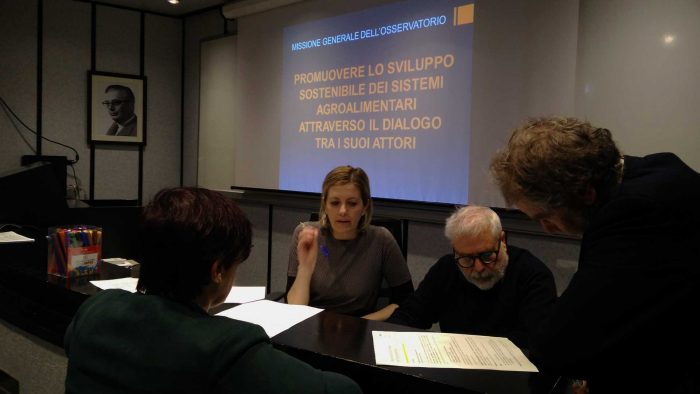
How I used facilitation tools and techniques to organize and deliver a series of workshops for the Observatory on the Dialogue in the Agrifood System (OsservAgro).
Series Navigation
Collective Intelligence Design and FacilitationOsservAgro has the goal of promoting a collective reflection process on the relationships between science and society by involving all agri-food system’ stakeholders: knowledge builders, businesses, knowledge mediators, decision-makers, and civil society.
Collective Intelligence is the emergent phenomenon created by people collaborating. They co-design possible solutions to the complex problems they discover through cooperation. Co-creation leads to more inclusive and systemic solutions that are more robust, sustainable and long-lasting.
How to design a workshop?
A Co-Design Workshop requires these elements:
- a Sponsor and/or a client which decide the purpose of the workshop;
- one or more facilitators who are put in charge by the Sponsor to organize and deliver the workshop;
- a facilitation plan, including a vision and specific objectives;
- a location or an online facility where to hold the event;
- technical equipment and resources;
- participants invited to attend the workshop.
As a facilitator, you need to adopt an adaptive and iterative design approach. You have to learn about the objectives that sponsors want to achieve, so that you can plan and design together with them the actual structured activities to be facilitated during the workshop.
Workshop Design Phases
Usually, I divide the workshop design work into four phases:
- Discovery
- Ideation
- Delivery
- Reflection.
This breakdown of steps has a lot of similarities with the design thinking process, the Human-Centered Design framework, the Service design process or the Lean Startup model in the business field.
It is based on Strategic Design and it is inspired by many of the principles you can find in: Systems Thinking and Critical Thinking.
Second-order thinking is another approach laying at the base of a robust Workshop Design strategy. It requires reflecting critically about how facilitators, sponsors, organizers and the same participants are acquiring knowledge to see if you need to adapt your plans according to what you have discovered through action.
The Discovery Phase
Information gathering
If it is your first workshop, you will need to meet Sponsors and organizers to understand as much as possible of their world. While you need to be a deep listener, you will have on the one hand to write down and have a shared agreement on the final objectives, on the other hand, you need to help them to clarify those objectives in a non-ambiguous and feasible way. Your role as a facilitator is already starting when you work with the organizers on day 1.
(Users) Participants Research
The facilitator needs to work as a Designer following the Human-Centred Design principles. We need to create tools, services, and co-design workshops that are solving the real problems of our stakeholders. While this requires, usually, extra effort in the Design Research phase which could increase the required budget and competencies of the designer/facilitator, it is also very difficult to access the intended audience.
Many social innovation workshops are open to the public and not strictly planned in terms of the profile for the people invited. It becomes very difficult, due to time and resources constraints, to interact with the workshop attendees with the intention of building a more tailored workshop for all of their needs.
There are several alternatives, from the very approximate and improvised ones (interviewing the sponsors, doing stealth guerrilla research, proto-Personas, etc) to the more radical and blocking (refusing to work for an unknown public!).
I was never able to do proper research and my best strategy has always been the following: never assume anything or, even better, always assume the worst possible scenario.
The Ideation Phase
Strategy and Planning
The craft of deciding how to actually organize the time in a room with participants is leaning more on the art side of things rather than science. You are dealing with people so you need to take into consideration the complexity of a group of complex organisms organized to create a synergistic mind to be more intelligent than just one of them. Yes, the ingredients are there, and experience helps but as it happens for the best cooks it is only when you have a wide range of facilitation tools available, good raw matter (the people!) and a clear vision, that you can aim at great success.
If you are preparing a workshop after the first one in a series, you will need to take into consideration any useful insights you have discovered during the previously facilitated events. This is where, in the Iterative Design approach, you apply the Adaptive Design mindset to facilitate the emergence of the final outcome most wanted by your group of stakeholders.
Using insights from previous workshops the designers refine and adapt the goals and the delivery plan to accommodate hints and suggestions.
You are building upon the feedback and the insights and the lessons learned from the previous workshop and you adapt your strategy and your plan in the structure of your delivery for the next workshop.
Define the Objectives
You need to transform requirements, needs and wants into objectives.
When it’s impossible to define a specific set of knowledge or skills that will be obtained by participants, the facilitator needs to negotiate, at least, the general aims or artifacts the Sponsor wants to get.
In OsservAgro’s case, there was the strongly declared aim of writing a Manifesto for the movement and a scientific publication illustrating the method and the outcomes. This was the North Star for me, as the facilitator, to drive choices and allocate resources. It was particularly useful to define the agenda for each workshop while keeping the continuity of all the design phases. I was lucky to work with clear-minded people: be very careful when you are not able to agree upon clear objectives for your workshops, it can lead you to chaos.
Content design and knowledge
During the preparation phase for the facilitator might be difficult to deal with new knowledge-domains, and new terminology, but this should not be the main concern for the facilitator because they are not supposed to be subject matter experts. Facilitators need to become effective collaborators by creating a synergy with the organizers in a way that they trust them and vice-versa. It’s difficult to design and deliver a workshop if there is not a solid trust relationship established since the very beginning.
The Agenda: Designing the Structured Activities
The Workshop Outline is the most important design tool for a workshop. A facilitator must use it as the single-source-of-truth establishing the written plan to reach the workshops’ objectives.
Sometimes you can be explicit and take the Learning Outcome concept from the training field as a design tool. But most of the time it is impossible to state, clearly, upfront, what “by the end of this workshop participants will know…”, know what?
We are gathering to discover together what we want to know more of, it’s difficult in these cases to state it upfront.
According to the difficulty and the ambition and the scope of the workshop, you might need a number of preparation sessions. Sometimes, a lot of them. In my experience, I tend to work from 1 hour to one day for each actual hour of facilitation. This is one of the difficult and hidden aspects to communicate to the outside world. That is why the session design should be participatory.
The facilitator is already starting to work since the first meeting with the sponsors and the organizers. They are more designers facilitating the process of co-designing together. Although there is less pressure for going fast and quick or having to respect specific constraints, so you are more free-flowing, the facilitator still needs to work as a designer having the goal of preparing the workshop. Especially if you need to be ready before the delivery date to support promotion activities start to prepare learning materials.
This phase needs to be managed as a real production process. The more you iterate, the more you’re able to reach your workshop with well-crafted sessions with very clear instructions enabling participants to give their best contributions towards the workshop’s goals.
How to collaborate
It’s very important to establish an environment of collaboration with a very open bi-directional communication channel, between the facilitator and the sponsors.
It is called co-design because the workshops are created together. Not only the participants are working collectively to pursue the workshop’s aims, but the Workshop Design is also collaborative and it needs to include, as much as possible, a representative group of all stakeholders. The facilitator is the orchestrator and the lead designer of the co-creation process.
The mood and the environment between the facilitator and the organizers need to be very smooth and the right place where everybody can be included in the preparation phase.
Not only everybody can be creative but the facilitator has the important responsibility of promoting the focused creativity of all the people involved.
While it is important to know how to combine different design and facilitation tools with the right timing, for the right people in the right way, (un)fortunately, there are infinite ways to prepare the recipe for a successful workshop. It’s like preparing to go into the field where you must have a plan but you also need to be ready to improvise. This is something that lies on the shoulders of the facilitator because they need to be ready in a redundant and conservative way about the many areas that can be faulty.
The facilitator’s role
During the delivery, the facilitator is not participating at all in the structured activities. A facilitator is responsible for:
- leading the dialogue
- timing
- promoting the resolution of disputes
- negotiating debates
And, the facilitator has a very important goal on top of all the others that is to bring the results home. The facilitator needs to do whatever is in their capabilities to reach the final objective negotiated with the organizer during the preparation phase.
In these regards, the facilitator needs to be a project manager, a coach, an organizer of the communication flows, and then needs to be the director of this Little Big Show that is going to happen in a collective way during the workshop.
From this point of view, it can be something really exciting. At the same time, you need to be able to get under a certain level of control of all of those aspects and be ready to improvise and cover any lack, or of any issue that will inevitably arise and still aim at creating the best possible outcome.
Learning experience design for social innovation
In the end, you are preparing a learning experience for a certain number of people that are going to learn, open themselves with others, discuss, work together in order to face some complex challenges. We’re talking about facing world hunger, improving the adoption process internationally, reducing the hazard of specialized workers in the heavy industries or in the healthcare or in the finance world or working in the field of social innovation in which you want to empower both the common citizens as well as scientists with the tools of clear communication with the final goal of facing problems as sustainability. The previous are some instances where I had the chance to facilitate workshops.
Keep following curatella.com to read about the next Workshop Design phases: Delivery and Reflection.
Series Navigation
Collective Intelligence Design and Facilitation
Design is Planning
Design is planning the purpose of something before it is made. Build more rational and useful products and services by carefully planning their making.
We must build useful solutions
I started to design digital products when I got sick of developing software nobody would use or would feel painful to use. I cannot stand to have my time wasted with tools and services not well designed so I decided to contribute to usefulness and rationality by facilitating toolmakers in creating more rational tools.
What is Design?
From a theoretical and academic point of view if you look for the definition of design you could study forever. There are so many different definitions of design that you could make a conference to disagree upon it, together, with designers.
And that is what usually happens! But that is fine with me. As a fellow, Systems Thinker, I like to have a multi-angled perspective and to integrate it in a more round and whole definition which is fuzzier and more fluid.
Design is a Plan!
When I took a Design Leadership masterclass in Rome, Italy, with Duane Smith and Stefane Barbeau of Smith,Barbeau the first thing which struck me was their definition of design.
Design is a plan.
Boom!
This has always been in my mind, forever, but never so explicit.
To design means to plan. Oh goodness, I love this.
Try to replace the term “design” with “plan” in any of the infinite list of combinations you can find now in the world.
- User Experience Design → User Experience Planning
- User Interface Design → User Interface Planning
- Graphic Design → Graphic Planning
- Instructional Design → Instructional Planning
- Learning Experience Design → Learning Experience Planning
- Workshop Design → Workshop Planning
- Service Design → Service Planning
This is the most ingenious verbal and conceptual invention since the man planned the wheel! (fun intended)

Design Leadership at PI-Campus. I am designing an anti-fake news app. Can you taste the word when you say it? Look at the reaction of listeners: that is on another level.
Here is a definition of Design under this point of view:
Design is planning the purpose of something before it is made.
So I’ve found myself attending a course on “Planning Leadership”. When I subscribed expecting to attend a “Design Leadership” workshop I had a certain set of expectations, now this is another game.
Is planning still Design?
Using “planning” makes immediately clear the need of talking about time, resources, goals, objectives, and management. The exotic images about expensive white boxes in luxurious Tuscan villas, immediately, fades out.
Yes, creativity, art, craft, skills are still part of the process but “deeesaaain” is not anymore that mouth-washing ritual where you take a deep breath and remain silent waiting to evoke impalpable feelings that nobody will experience in the same way.
(Re)Discovering what I always knew
I have always been a planning designer in my whole professional life. And that is my approach when I have to design a software application, a mobile app, a website, a videogame but also: a training session, a university lecture, a facilitation workshop, a service, a pitch-deck, an event, etc.

PI-Campus: Design Leadership: I was planning lunch. Planning the design of a solution brings things down to earth and gives designers and stakeholders a fresh bath of realism and pragmatism. You can feel that you need to ask yourself, your client, your colleagues, practical questions geared towards knowing the context of the solution you are designing. I mean… planning!
Writing is an important part of the design process (that is: the planning), since it constitutes an envisioning activity to think about the purpose of the system you want to design and to communicate it to all the stakeholders.
Planning at the O.K. Corral
- What is that you want to build? And why?
- Who is going to use your solution? And how?
- How will they accomplish what they want or need to do?
- When will it be ready?
- Who is our competition?
- Is there any demand for a product like this?
- Are we able to build it? Can it be built at all?
These straightforward questions are frequently considered superfluous or banal. It takes courage to avoid pretending to have all answers understood and staring right in the eye of the client, who is still supposed to pay you the agreed lump sum in advance, and ask them “What do you want to build? And Why?”. This is my version of the two cowboys meeting under a dusted sun while having slightly trembling hands reaching for their guns.
What are you planning (to design)?
What really makes me happy is the feedback of my creative partners, not designers by nature. At a quick reading of this concept about Design=Planning, they got it at the first shot. How do you know if they know? By asking the most straightforward and direct question:
– “So, what is design?”
– “Easy, Design is a plan!”
I am so satisfied that I am thinking of planning the next articles on this topic.
And, tell me, what are you planning?
Related