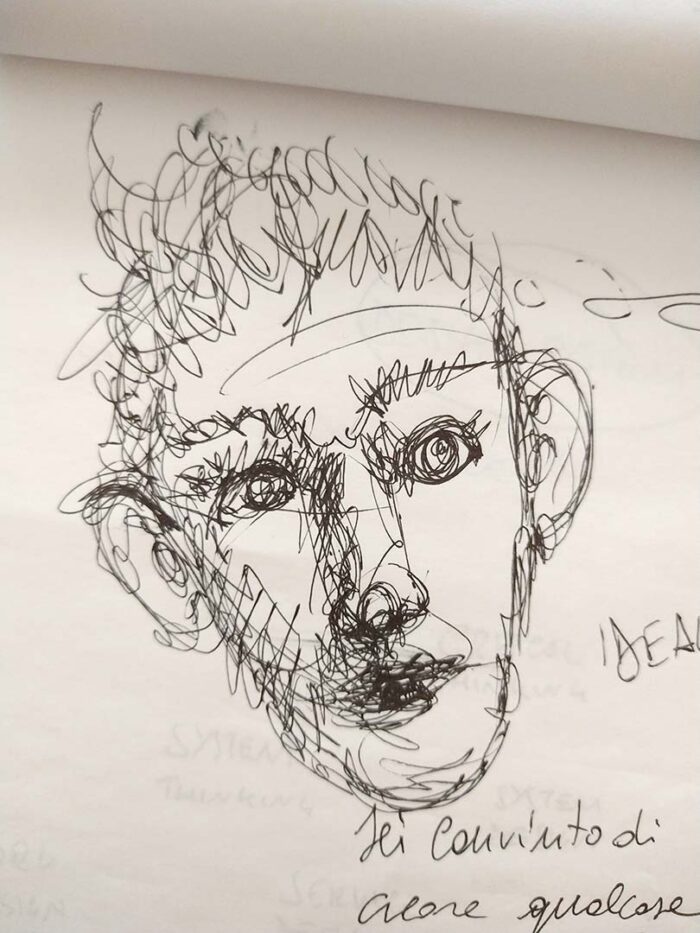
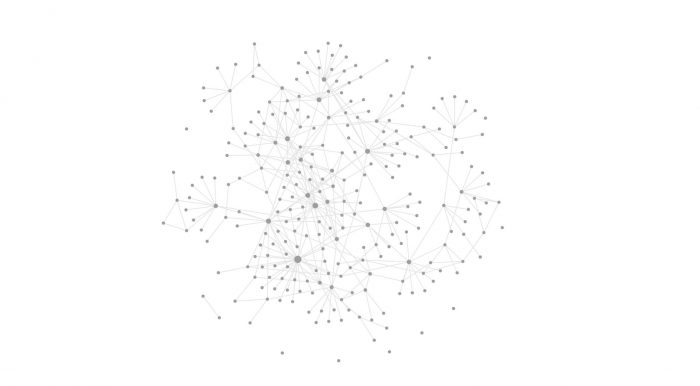
I’ve spent more than 200 hours writing, reading what I wrote, connecting thoughts, and reflecting on my way of thinking. That made me more self-conscious and more willing to spend more time reflecting.
I am always thinking! Of course, thanks for asking. I always feel I get lots of useful thoughts to drift away and to get lost with. Usually, either I end up daydreaming or forgetting what I was thinking of.
I don’t want to fall into the eternal trap of thinking always the same thought, without evolving concepts. You grow, certainly, your mind and your capability to think better. How does it compare to gather drops of rain to drink rather than pouring water into a glass?
Writing-while-thinking and thinking-while-writing gave me more continuity, self-awareness, and the capability of leveraging on the evolution of certain thoughts instead of thinking those same things, repeatedly, at the almost initial level.
The habit of daily writing is the foundation of this next level of self-awareness and setting your thoughts on a permanent medium is the right way to evolve your thoughts.
Read what you wrote, find meaningful connections with your previous writing and you will grow towards more networked thinking.
Writing is thinking and if you cannot think clearly you cannot write.
I’ve experienced the hedonic adaptation phenomenon.
We tend to get back to an everyday mood despite peaks of negative or positive feelings. We adapt quickly to a new situation after a rise in happiness. That’s why the exhilaration of happy moments doesn’t last long.
If I stop to reflect, I realize that the journey I go through while writing every day is much more meaningful to me.
That can be found in many wise words by smart people. You tend not to believe it until you experience it.
It grew on me an expectation of uncontainable happiness and fulfillment if I ever reached my writing goal for one year. But when I’ve started to approach the end of the challenge, I’ve begun asking myself: and then? How will I feel when I will have written for one year, every day?
And it went even worst on the last day. I was planning on celebrating and making a party and writing how I felt about it. But the excitement was not there. It felt empty and shallow. I wrote half a million words, and so what?
A lot happened. And it will take time for me to realize it.
We should aim at following the process rather than being fixated with the goals.
This is the beginning of my challenge to publish 30 atomic essays in 30 days. I’ve decided to pay 50 USD to a stranger to commit myself to do what I haven’t been able to do on my own. Thanks, Internet.
I wrote daily for one year for a total of half a million words. Why? What did I write about? What have I learned in the process? I thought I should make a reflection on this important challenge. I’ve learned something. Mostly about myself. And I’ve also committed to leverage on the compound effect of writing daily. But if I don’t extract the essence of this herculean effort, this thing which made me suffering and proud, which made me stronger and more aware, then why would I have done it?
That’s the perfect place for “Shipping 30 Atomic Essays for 30 Days“. Writing, every day, for thirty days about what I have learned by writing for 365 days. Very meta, recursive, and fractal. But also very abstract and intangible until I won’t make sense about that experience.
I am concluding, with these words, my challenge, writing at least 500 words per day, every day, for one year. On everything and anything, thoughts, notes, or reflections. But also ideas, article drafts, transcriptions, remarks, elaborations. I feel weird. I am perplexed. I have such an enormous amount of downloaded thoughts in this half a million words that I am overwhelmed. I’ve learned and understood a lot of things about myself and on myself. Most of my writing has been self-therapy, exploration, boredom, demotivation, inspiration, and, sometimes, also desperation.
Half a million words could fill a 2,000 pages book. Four books of 500 pages each. Eight books of 250 pages each. “Book” is a big word. Of this infinite sea of thoughts, all of it has been useful for my growth but, little, very little is worth the effort to share it. And this is another vital reflection. If I hadn’t poured 500’000 words for 264 hours of work, I doubt, seriously, I could have achieved another challenge that I have failed for decades: publishing on my blog, more or less regularly.
About 60’000 words published on Curatella.com in less than one year.
My WordPress statistics say that I have published (not only written!) 30 articles and 32 pages for a total of almost 60,000 words. And this in less than a year.
For every ten written pages, to stretch the analysis, I’ve published one. There’s another excellent learning. To get something done, I need to try ten times. Not necessarily to reach any excellence or win any indeterminate recognition, to pass from my private to the public, I had to extract five hundred thousand words painfully. I have a different perspective on future projects. There is no planning, theorizing, talking, or dreaming, which is worth it if you don’t put the hard work in it. Work to be done, first of all, on yourself. Critically and humbly.
And now, what? What shall I do of this? Why am I not feeling like celebrating? All of this work led me to understand that, maybe, at last, I can finally start. This is not arriving. This is not a finish line.
I am on the line, yes, but on the starting side.
The race hasn’t started, yet.
Do you want to know how I wrote half a million words in a year?
I am really confused about my latest article: Simply Complexity Podcast with Kevin Richard and Massimo Curatella. I spent a lot of hours at night, stolen from my resting time, to carefully transcribe, revise, and highlight the discussion that went on between me and the host. I’ve found a lot of anchors to link to notes and previous articles. And many other refinements and prompts are there still to be done.
But the article and the podcast received very little interest. I think, asking for 60 minutes of continued attention is too much, nowadays. What’s the latest 60 minutes podcast I’ve been listing to? I remember the one with Naval Ravikant by Shane Parrish, many months ago. It was astounding and I enjoyed it while having a beautiful walk. More or less improvised conversations can be really interesting and engaging but you need to be really caught by the topics and the speakers have to be fluid, relevant, insightful.
I feel that this conversation was like venting off, for me, after years of thinking about the topics treated without the possibility to interact about them. I am naturally tending towards understanding the complexity of nature and its relationships, to go beyond the surface of things, to make connections between diverse fields and disciplines. I basically enjoyed it so much that I wasn’t even thinking to an audience or to make an article out of it. It was good and useful for me just for the sake of having a deep conversation with another person strongly passionate about the same topics.
I am proud and satisfied with having had this conversation in public and it’s only now that I am questioning the purpose and the usefulness of publishing that event online, on my blog.
If recording and writing thoughts and conversations are not enough to build more connected thoughts, the next step, then, would be exactly to extract the key topics and connect them into my already existing notes. I need to have the patience of growing “knowledge piles” by tidily and neatly accumulating knowledge blocks by topic and by connection. My usual concern is: if I am exploring and connecting in all directions, at 360 degrees, how much time will I need to have a solid thread of knowledge, thoughts, and reasoning on one single topic?
If “too much” is the possible answer, then, I am not doing it well. I have to, not only curate my thoughts but also to create an information architecture in which the pillars, the key topics, are emerging, clear, and easily recognizable.
Assigning tags to articles is not enough. Writing notes dedicated to topics is not enough. I need to create continuity in a dialogue about a single topic. What are the experts thinking about it? What has been said about it, in the past? What’s the current situation? And, then, finally, what can I add to this dialogue? What’s my novel and useful contribution to that thread?
Isn’t that just the work of a researcher? If yes, what am I researching? If research is something well established as a discipline, what do I know about it? What do I want to acquire and use as a practitioner? What’s the role of having conversations about the researched topics in the public? What’s the added value in transcribing and blogging about a podcast? How do you know when your research is valid, good, useful? How do you do research outside of academia?
I’m on the street. No computer with me. I still want to blog. It’s a useful exercise. No comfortable keyboard nor screen. Cannot write long. It’s difficult to focus without being frequently distracted. But thoughts are flowing, in abundance. If I recorded them I would have had thousands of words. But it would have been impossible to edit it. So, there is no second draft. This is the first and the final. While I am happy to be in the flow, right now, I’m concerned about the content, the style, the grammar. And that’s exactly what I am fighting now. I’ll live with it. So far so good.
A concept I brought with me in this rare pausing moment is the idea of trust. I realize that I am always looking for absolute and transparent trust in my relationships.
It feels so good to know what the other is thinking without asking or without them to express it. Both in love and at work.
It feels so bad when you are betrayed and hurt for reasons hidden to aliens. And known only to you two.
It gives me a deep warm feeling of calm satisfaction knowing you can delegate fully to them. And knowing it will be alright. No, it will be exceptional.
I am grateful for this. It makes me feel not alone.
Although I deviated from the usual concepts I treat in my writing, being able to work everywhere, with hard constraints and nurturing a trusted network, are topics relevant to my focus of thinking and living in systems.
This is my experiment for this week. I can’t wait to write about the podcast I have recorded which should be online next week. Be patient to wait with me. Subscribe to my newsletter to be reminded about its publishing.
After an exchange on Twitter with Kevin Richard about complexity, how to face it, how to manage it, and how to communicate it, I had a deep, improvised, and intense online conversation with Kevin. We’ve spoken as we’re being friends for 20 years. We went into the weeds of an intense conversation about the topics that we love to discuss on our own blogs and online circles.
It was natural to think about doing something more, together. So Kevin invited me to his podcast, to talk about the same topics. This time, we would record a podcast episode.
Excited about the possibility I did what I usually do when stars collide: I tried to put my thoughts together on the topics which have been on my list for a long time, now. What do I know about Systems Thinking, Critical Thinking, Design, Management, Leadership, Communication? Not a Ph.D., for sure, but I’ve thinking, writing and trying to apply them, in one way or the other in everything I do.
Let’s talk to me
I went to the place I like to go frequently: my mind. And I did what it became natural to me when I need to think: I wrote. Or, better, I talked. I recorded some drafts, impromptu conversations about those topics in a smooth and seamless way. I went into the flow of expressing what interests me, what I feel, and, most of all, what questions I have still unturned. I did transcribe my notes, yes, they went into my journal. But I did not reread them, nor I’ve added them to my Zettelkasten. It was a needed exercise to remove the pressure of thinking too much privately and expressing it too little with words, which somebody can hear.
You cannot contain complexity
That’s when I had the first symptoms of the phenomenon we’re talking about. You cannot contain complexity in straight talk. You cannot express it fully and make it clear, just because you take all the time to put your thoughts in line. And this was the taste I would have been supposed to feel during the podcast. This is talking about complexity, you cannot use it up, you cannot exhaust it. And that’s what gives me thrills of joy and fear. That’s my element. That’s what I need to explore. That’s what I don’t know.
Let’s talk to the Collective Mind, Then
Not happy, and really busy with work and life, I let my diffuse brain cogitate on it, in the background, while designing my life out. But, what if I make good use of the many communities I am following? What if the right scope and functions of people in those communities are to contribute to my loud thinking? Without too much hesitating I’ve prepared a draft message in the spirit of a quick call to friends, just to ask a simple question. And I started to post it in my favorite online circles.
When someone asks “how do you deal with complexity”, I was trained to reply “by reducing it“. That’s probably a very common takeaway when you read about general systems theory.
You cannot transfer complexity 1:1. It’s like how you cannot understand the world as-is. The complexity has to be reduced: in the case of humans, we have limited sensory input (one reduction), a couple of filters (another), and on it goes. (Check out some overviews of epistemology; […]
[…]. So we never deal with the world per se, but with our representation of the world as we understand it. The reduction step is one part of the puzzle.
The other is the re-creation of internal complexity inside the system, aka us humans, through experience. Even our simplistic representation of the world gets richer and more nuanced; never the real deal, but more complex than the representation of a 1-year-old child.
How do you understand complex topics …– by reducing the external complexity of the unknown/the world/the topic, and recreating an internal representation with its own complexity —
… and explain them in an efficient and effective way for those people who can act to solve wicked problems? Now all of that sounds like a bit too much to discuss in one sitting. Richard Feynman did a great job at reducing the complexity of physics and explaining it to others.
[…] “wicked learning environments” that (Epstein 2019) said he got from (Hogarth 2001), but I haven’t checked!, which is: [T]he rules of the game are often unclear or incomplete, there may or may not be repetitive patterns and they may not be obvious, and feedback is often delayed, inaccurate, or both. (Epstein 2019, p 21)
sfast was lapidary:
I never explain anything to people who are the ones who take action. And I never accept anything from a person who does not take action but theorizes about a problem.
This makes me think. And I am not sure yet what I think about it.
Ethomasv provides a practical approach:
[…] complexity is somewhat individual assessment.
Whenever I have something that I can’t grasp I do:
1. Find practical examples – seeing how something works in practice helps
2. Find special cases – those cases live on the edge of complexity, usually they are unique because they rely on the theory, but they have specific conditions so that a big portion of complexity can be reduced with abstraction.
3. Find more than one explanation of the same thing – sometimes the obstacle is not complexity itself, but the way explanation is phrased. I always look for different authors and textbooks, they will deal with details in a different way, organize info in a different way, and one of them will resonate more with the way I think and connect information internally.
4. This brings me to the last point, there is no one universal way of explaining something because in order for someone to understand you, you need to use their mental models to describe something to them. Your mental models won’t work. So when I am trying to explain something to others, I try to build up complexity instead of reducing it. I start with very simple building blocks that we are familiar with and then combine them into this complex thing I am trying to explain.
A great synthesis with essential concepts related to understanding, explaining, communication, and mental models. Well done.
Jeannelking connected:
[…] my colleague, Dan Roam, said that has stuck with me: “the person who can best describe the problem is the person best-positioned to solve the problem.”
@ethomasv presents a great example of this in their post above. When we can find a way to understand the problem well enough to describe it effectively to another, that can bring both of us to a place of greater clarity and understanding, where meaningful solutions may begin to be explored.
this speaks to being able to explain them in efficient and effective ways for people to be able to take action. Alan Alda’s Center for Communicating Science at SUNY Stony Brook focuses on helping scientists communicate huge – and wickedly important – ideas in ways that non-scientists can understand.
Dan’s statement focuses on increasing clarity for yourself, which can then be shared with others. Alda’s book focus on how to do that sharing in effective ways through connecting, relating, and storytelling.
Jamesrregan links
Uncertain times The pandemic is an unprecedented opportunity – seeing human society as a complex system opens a better future for us all.
GeoEng51 refer to the Bongoist
I believe Richard Feynman had a quote along the lines of — if he wasn’t able to teach a physics idea in a first-year undergraduate class, he didn’t really understand it himself. So, one tactic might be to strive for that level of understanding and clarity on an idea first for ourselves, before we attempt to enlighten others 🙂
And that’s exactly what I like to do when I want to create clarity on my mind about complex topics.
What’s the podcast theme and who is its audience? What do they listen for, typically – answers or questions to make them think? Are you a fan/listener of the podcast yourself? Are you typical of the type of person interviewed, or are you a break with tradition (ie something different for the audience)?
Always start with your audience. If you don’t know who you’re talking to, how can you curate what you know into meaningful learning and take them on a journey?
The podcast host should be able to tell you about who their listeners are and why they’ve invited you on the show.
Also, how long is the interview? Your topic so far is actually three topics:
How do you understand complex problems?
How do you make other people understand them?
How do you create a positive, efficient and effective movement of change-makers?
Unless you have half a day :-), I suggest focusing on 1 and 2.
And “always starting with your audience” is an universal permanent design principle.
Writing Group in the Inner Circle of Ozan Varol
I wrote:
I am going to be interviewed for a podcast about design, Systems Thinking, Critical Thinking, and complexity.
I have been so wise to choose an impossible topic: “How do you understand complex topics and explain them in an efficient and effective way for those people who can act to solve wicked problems?”
I know it is just impossible. That’s exactly what frustrates me and move me, at the same time.
I was looking for your thoughts, inspirations, quotes, suggestions but also provocations, critiques, pitfalls, traps.
Of course, I am taking into good consideration the continuous efforts I am putting into my Zettelkasten. It grows. In a messy way. With joys and pains. I have one “Ah-a!” for 10 letdowns. But I know it’s my chance to really augment my brain.
I have a few online pen friends, there, following the evolution of my writing endeavors.
Kathleen Marie (Kmarie6) fueled my fire like this:
Is understanding complex topics a process? Are you looking to find a system that can take one through the process that accepts let downs, seeing the letdowns as steps towards the ah-a?
I’ve always liked the idea of asking “Why” 3 to 5 times as a way to get to the root of a problem. What has been your own process in creating and continuing your work on Zettelkasten?
I feel the toughest part of your topic is explaining in such a way that one can then be effective in solving wicked problems. How do we take into account everyone’s different learning styles, biological frames of mind that integrate with one’s personality, etc. in order to explain in such a way that they “get it”.
Critical thinking, problem-solving, and communication, appear.
Rage-panda gave it a go:
I would love to learn more about, and discuss this topic. As my role in product management, we often have to take a large complex problem and break it down into smaller solvable problem to solve. To increase complexity, the solutions themselves are also complex, which requires breaking down the solution into atomic elements that can be implemented sequentially based on dependencies and value.
Once that’s one, I review the atomic elements to determine dependencies and ensure what sequence it needs to be supported, or built.
Finally, now that I have the protagonists (the solutions), the antagonists (the problems), the journey (the sequence of events), I can start to build the story or narrative to explain the problem or the solution or both depending on the audience and objective.
See how the essence of complexity emerges? Reductionism, finding dependencies, telling a story to unroll the complexity.
You may find a good resource in Tesler’s Law / Law of Conservation of Complexity. There’s some good resources in the appendix on more recent copies of Obvious Adams, too. Tesler’s law is my most useful. After a certain point complexity is not going to go away, however, you can make a choice about who deals with it.
An interesting law I was already supposed to know and a weird book. Nice!
Hidden in the word ‘complex’ is the feeling of frustration that you can’t get the answer right away. If you could look at it and get it, then you wouldn’t call it complex, you’d see it and call it simple.
Your attention is focused on something large thinking it’s large and difficult, and because of that, you aren’t focusing on the details which make up the complex. For example, we know we need a car to drive, but we may not know all the parts of why we drive. We just drive.
Simplicity when dealing with complex tasks comes after repeatedly identifying small chunks of the complex, reducing them to simple, and repeating over time. We know how to drive because we learned each part of driving.
So, there are two ways to make complexity simple:
Construction of the Simple Make infrastructure that is easy to interact with for the purpose you desire. I wake up and brush my teeth, because I believe brushing my teeth is necessary, so I will do it whenever I wake up. Every marketer’s dream is to be your toothpaste.
Understanding over Time(UoT) Reducing a complex observation to details you understand. And doing this until you can recreate the complexity in a easier light for others, so they can(at the least) believe that the complex is simple(i.e. construction above).
Simplicity hides the feeling of confidence that we understand, just like complexity hides the feeling of frustration that we don’t understand.
That was straightforward yet articulated and rich with metaphors. Really great contribution. I can see the concepts of living in systems of systems, zooming in and out according to the focus, reductionism to make complexity acceptable. And the beautiful metaphor of driving a car is something I already used in the past and I will definitely use it in the upcoming podcast.
Cestjeffici postulated
Complexity by definition can’t be simple. Framing the issue as making complicated simple would be easier. Most people don’t understand the difference. Looking at the Cynefin Framework definitions of complex and complicated will help.
In a complex system there is cause and effect but it is impossible to find because they are so intertwined.
In a complex system you probe and evaluate.
In a complicated system the cause and effect relationships are clearer. There are logical interconnections that can be discovered.
To make a complicated system simple you find the few places that have the most connections to other elements in the system. Changing one of those points changes the entire system.
I like explaining things to kids. Or to elderly relatives. To someone with little patience, but considerable intelligence, and who I also love.
A big part of explaining is also listening – especially if the topics are complex. Your explanations are best posed as a mutual exploration, where your listener is discovering your topic, and you are discovering their course.
To which, Liberalintent, replied
I’ll second the listening part, I learn by putting aside what I thought was correct and acting as if I thought like someone else. I think the more of yourself you put aside, the easier it is to observe the reality, rather than try to tie it up in a neat simplification. The simplification always cuts out valuable parts of the reality.
And this is what I like to do. Exactly this. I love the concept of mutual exploration and putting your self aside to explore reality. Men and women, this is like being at the Luna Park, again.
Glinglin would strive for clarity, instead:
How can I develop a practice to explain things as clearly as possible?
A complex concept, when explained clearly, may not become simple, but will simply be understood. If a concept is understood, it can be practiced by people with the power to make an impact.
A model that you could use is the structure of Wired’s 5 Levels series. This series will take a complex abstract concept then explain it to:
You could model this by breaking a topic up into engaging explanations for each of the 5 levels, then using the explanation that best matches the ability of your target audience.
And that’s communication! The clarity in making things understandable, not necessarily simpler or reduced.
A rock in the water, without waves
This is what didn’t produce any useful feedback:
"How do you understand complex topics and explain them in an efficient and effective way for those people who can act to solve wicked problems?" I know it is just impossible. That's exactly what frustrates me and move me, at the same time.
Being so inspired and full of prompts and inputs I jotted down an outline, kindly set up by Kevin in Dropbox Paper. Nice tool, btw. Not in a sequence, not exhausting, it is more of an anchor than a sequence of concepts.
Podcast with Massimo
Topics to discuss
How I prepared for this podcast. Internet as a Collective Mind/Personal Learning Network
Doing hard things
As Bruno Munari said “To make things hard is easy, To make things easy is hard.” it is not easy for a facilitator to create a successful facilitation event. And successful facilitation must be easy for participants.
“Evil comes from a failure to think.”― Hannah Arendt
The reason is a double-edged sword: “…our reasoning mechanisms focus on arguments that support our initial views and are content with relatively shallow arguments.” taken from Dan Sperber’s, The Enigma of Reason
How to communicate complexity (if and when you have it understood)
Reducing the level of approximation of information about the user
I started to have a synopsis for a book. Something good to inspire a semester to teach. Great! This is really impossible to do in one hour!
Are we ready for this?
Of course, I am… not. What did you think? How can one be ready for complexity? You cannot.
But the fantastic amount of suggestions, books, links, articles, thinkers, and connections I received from online fellows is really astounding.
I was able to calibrate my thoughts, to refresh several concepts, to improve my bibliography, to refine some quotes, and to put together a better hierarchy of things to discuss thanks to an outline.
This started as a private draft. And then, it became an article. Read the story behind it.
My problem with writing comes from the immediate satisfaction I get after I have written. It’s such a powerful self-therapy tool that I don’t care about the next step. Seen as a way to dump my brain and to relieve myself from the confusion of too many thoughts is a magnificent tool. But when I take that amorphous sequence of words and I consider its publication I feel dubious and doubtful. I need to focus more on the whole workflow of publishing, in which writing spontaneously is just the first step. Important but insufficient to create a readable article.
Publishing is exciting and liberating. If I write about thoughts concerning me or agitating me, I can’t wait to forget about them. I want, not only to write them down, but to put them in a form which can be shared, as soon as possible with as little work as possible. And this is the limitation of my current workflow. I get nauseated by my drafts so bad that I cannot stand revising, reviewing and editing them. Actually I don’t like to review any of my writings. I find it boring and annoying. Since I’ve been writing that, I feel I have to go through the same emotional process I went through when I wrote it in the first place. It’s fatiguing and painful. I feel the stress of redoing the thinking process once again after I’ve felt so liberated by having completed it. That is why reading once again the same internal dialogue is exhausting.
One possible solution is to write a draft, as quickly as possible, and as exhaustively as possible and then to leave it rest for some days. To take a distance not only from the outcome but also from the thinking process. After enough mental distancing I should be able to get back in that place in my mind with, maybe, less intense emotions and feelings about the topic. The goal here is to minimize the close connection between the mood contextual to the draft writing and the final draft review.
I have some good hints to write a potential workflow.
4 steps to transform a draft into a final article
Write a draft as quickly and as thoroughly as possible.
Put the draft aside and forget about it for at least a week.
Get back to the draft and see if you feel different while reading it. Do you feel the same reactions with the same intensity as when you initially wrote it? If yes, wait another week.
When you finally feel enough distance from your words: start the revision. Be sure to have a goal and an intention. If it is not just a diary page that you want to read to get inspiration (maybe to write more) then you should have a specific goal in mind: a target audience, a medium and an outcome generated by the publishing of that writing.
Application in other contexts
This phenomenon is affecting not only blog publishing but also publishing a new newsletter issue. I feel so excited and want to let it out that I am inpatient and little tolerant of the workflow when I am writing the body text. I really don’t want to spend another couple of hours to craft the copy, the headings and to also add an image. I just want to get rid of it! I want to do more, write another article, another diary page, another draft.
This is related to the tone and the mood embedded in my writing style. I tend to be in a vulnerable place, just before I am hitting the ‘publish’ button. So I am rendered as a disarticulated thinker, overwhelmed by his thoughts and his emotions, almost looking for public help (instead of public recognition). And maybe that is exactly so. I am looking for help in clarifying and sometimes justifying my thoughts.
There you go: this is what I don’t want. A soliloquio in which I raise a psychological fence and I set the environment all-about-me and not about-you-the-reader or as I aim to: all-about-us-as-a-people-thinking-together.
This is also a reason why I get demotivated and I just stop writing. Why should I go through the pain of all of this? Who has just prescribed that to me?
But I am not fair to myself. I recognize the immense benefits of having built a habit in journaling, time management and the first timid trials in Personal Knowledge Management.
I am young. At heart. I just need to be patient. Insist. And work on my publishing habit. Recognizing that is not exactly the same as writing, journaling, thinking, knowledge working, discussing. Especially if I have such a clear mind on how I want to be perceived and where I want to drive my personal research.
A meta-solution
What really amuses me is that I’ve applied the very same method I’ve materialized here to this article. I wrote a draft and I’ve invited people from the many communities I am following to give feedback. And… it works! After a few days I am publishing the final version.
George Pór asked me stimulating questions which lead me to think and write about my Personal Knowledge Management workflow. This is a refined elaboration of that thread.
Writing is not enough
I’ve built the habit of writing for 30 minutes or 1’000 words per day. I’ve started on the 24 of September 2019. I’ve discovered that writing is immensely beneficial. But it is not enough.
I am trying to evolve my journaling habit to a higher level of reflection and connection. Dumping thoughts is not enough. I need to build a network of thoughts on top of which I can be creative, innovative and I can deeply strengthen my knowledge.
This requires great changes in my workflow.
Reading is not enough, note-taking is not enough, writing is not enough.
If I want to grow my knowledge ecosystem I need to understand carefully what I observe, read, listen, and watch; rephrasing in my own words, writing it down in my PKM system and searching for any connection with my existing knowledge.
This is adding a lot of work to what I was already doing. It’s harder to do. It requires more focus and concentration. It’s harder to build as a habit because within the same dedicated time I now can do less, much less reading.
So I need to develop “resonance” strategies to drive my attention. I should focus only on those learning activities bringing the highest value to my learning path.
Everything looks great, in theory, but doing it is a real challenge.
My data want to be free
In terms of tools I am really sick of losing my data to big corporations locking me down with proprietary technologies. This is happening since the day of my Commodore Vic 20 in 1982. I am done with that.
I want my data to be device-agnostic, free to be used anywhere, anytime with any tool. That is why, while I am keeping an eye on Notion (nice, free, but heavy), Evernote (prehistory, I am about to stop paying for it), Roam Research (the cutting edge frontier) and the many seeing birth as mushrooms after the rain.
I want to focus on my content, my files without worrying about the tool.
Obsidian: a new notes management system
Obsidian: “A knowledge base that works on local Markdown files.” is just one of the many Note Management Systems managing pure Markdown/text files without a centralized database or a proprietary format.
Obsidian, a networked thought tool based on pure text.
This has limitations, of course, no built-in cloud syncing (they’re working on that) and a young and not mature set of features. But I feel free! Maybe for the first time.
No Microsoft Office, no Google Docs, no proprietary tools to read my thoughts! Notepad would do or any pure text editor would allow me to access my Second Brain.
Evolving my publishing workflow
This is what pertains to personal knowledge management for the internal workflow of reading, writing, thinking.
When we talk about collaboration or publishing we need to look at different needs, constraints and tools. In my case I am looking to refine my workflow in which I exploit in the best way my private PKM system to create interesting ideas, connections and speculations.
Then I would extract those notes to create a draft and, at this stage, I am out of the PKM System, I am inside the realm of the infamous text editing tools. Again, but within a different context and with a different purpose.
What did I publish so far with this evolving workflow?
Just went through Massimo Curatella’s notes – thank you! I would be interested to know more about the following bullet points:
Having too many ideas. Struggle in finding a common thread. Concerned about building an audience while being eclectic
What about curating sources, filtering inputs.
And this was my answer. About:
Having too many ideas. Struggle in finding a common thread. Concerned about building an audience while being eclectic.
This was my reflection during the call. While we started discussing about lacking ideas or how to generated ideas, I was of the exact opposite stance. I have too many ideas and I struggle to capture all of them.
I tend to have a few important thoughts to be repeated so, in same cases, I tend to re-discover the same things.
I was curious how my fellow peers would face the challenge of finding common threads among ideas when they are too many.
I am researching methods to structure and connect ideas. Also thanks to concept as the Memex (from which Roam Research seems to be inspired), the GTD for Ideas of Tiago Forte, BASB (Building A Second Brain) I have finally converging towards a more structured and focus workflow in which I not only gather, capture and generate idea but I try to connect them. My latest approach is based on the Zettelkasten Method and a purely offline note management tool called Obsidian.
Moreover, trying to answer to myself within our call relating to:
What about curating sources, filtering inputs.
I was wondering about being more intentional in my information consumption by carefully selecting the sources instead of mindlessly scrolling and critically and rationally absorb information by understanding it deeply.
Very nice to say. Very hard to do.
What do you say?
We use cookies to ensure that we give you the best experience on our website. If you continue to use this site we will assume that you are happy with it.